Trending
IWD: Three of Five Female Speakers in Southwestern Nigeria forced to resign
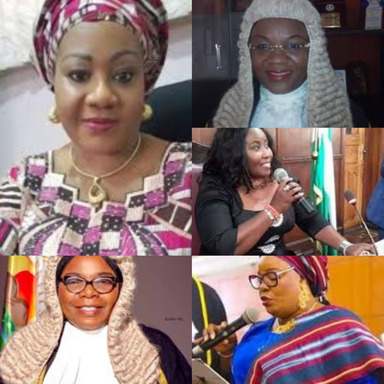
As the world celebrates this year’s International Women’s Day, it is important to recognize women who have made significant strides in Nigerian politics. One key area of progress is the role of women in legislative leadership. In southwestern Nigeria, five out of the six states—Ogun, Ondo, Oyo, Ekiti, and Lagos—have produced at least one female Speaker since the return to democratic rule in 1999. However, Osun State has yet to have a female Speaker.
Despite their historic achievements, three of these five women were either impeached or forced to resign before completing their tenure. Their stories highlight both the progress women have made and the challenges they continue to face in Nigerian politics.
Titi Oseni-Gomez (Ogun State, 2003–2008)
Titi Oseni-Gomez made history in 2003 as the first female Speaker of the Ogun State House of Assembly. She was re-elected in 2007, serving as Speaker for five years. However, her tenure was cut short in 2008 when she was impeached under controversial circumstances. Her removal was linked to political power struggles within the state, a common challenge faced by female politicians in Nigeria.
Monsurat Sunmonu (Oyo State, 2011–2015)
Monsurat Sunmonu was elected Speaker of the Oyo State House of Assembly in June 2011, becoming the first woman to hold the position in the state. Unlike many of her counterparts, she successfully completed her term in 2015 and went on to become a senator, representing Oyo Central Senatorial District in the Nigerian Senate. Her political journey stands out as an example of how female leaders can navigate the system and rise to higher positions despite the obstacles they may face.
Jumoke Akindele (Ondo State, 2015–2017)
Jumoke Akindele was elected Speaker of the Ondo State House of Assembly in 2015, breaking new ground as the first woman to hold the position in the state. However, her time in office was marred by political controversy. In 2017, she resigned from her position following allegations of fund misappropriation. Though she denied any wrongdoing, the leadership crisis within the Assembly ultimately led to her stepping down.
Olubunmi Adelugba (Ekiti State, 2022–Present)
Olubunmi Adelugba became Speaker of the Ekiti State House of Assembly in 2022 and remains in office as of now. Her election was significant as she replaced a male predecessor amid political tension in the state. Her continued tenure provides hope that more female politicians can attain and sustain leadership positions in the region.
Mojisola Meranda (Lagos State, 2025)
Mojisola Meranda was elected Speaker of the Lagos State House of Assembly on January 13, 2025, following the impeachment of Mudashiru Obasa. However, her tenure was one of the shortest in history, lasting only 49 days. She resigned from her position following a leadership crisis that shook the Assembly. Her abrupt exit once again highlights the instability that female political leaders often face in a male-dominated political environment.
Challenges and the Road Ahead for Women in Politics
The experiences of these five women show that while female representation in Nigerian politics is growing, the obstacles remain significant. Three of the five female Speakers in southwestern Nigeria were unable to complete their terms due to political crises, impeachments, or forced resignations. This pattern raises important questions about the structural barriers that limit women’s ability to lead and sustain political power.
Factors such as political godfatherism, internal party conflicts, and gender bias continue to affect female politicians in Nigeria. Women in leadership positions often face heightened scrutiny, with any perceived misstep leading to swift removal, while their male counterparts tend to have more political backing and resilience in the face of controversy.
As Nigeria continues to push for greater gender inclusivity in politics, it is crucial to create an environment where female leaders are given equal opportunities to lead and complete their tenures without undue interference. Increased advocacy for gender equity, mentorship programs for women in politics, and legal reforms to protect female politicians from unfair removal can help address these challenges.
This International Women’s Day, while celebrating the progress made, it is also essential to reflect on the work that remains to be done. The achievements of female Speakers in southwestern Nigeria serve as an inspiration, but their struggles highlight the need for continuous efforts toward a more inclusive and fair political system