
Trending
Cash Reserve: CBN debits N1.4trn from defaulting banks
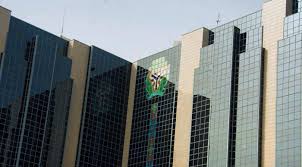
The Central Bank of Nigeria has debited commercial banks in Nigeria a whopping sum of for failing to meet Cash Reserve Requirement (CRR) targets.
CRR is the minimum amount banks are expected to retain with the CBN from customer deposits.
From the list of debits suffered by banks, Zenith Bank ranked the highest with about N355.9 billion while FBNH and UBA came second and third with N208 billion and N204 billion respectively.
Others are Zenith Bank: N355.9 billion, UBA: N204.7 billion, First Bank: N206.1billion, Stanbic IBTC: N143.9 billion, Standard Chartered: N120.6 billion
In January 2020, the Monetary Policy Committee (MPC) of the Central Bank of Nigeria (CBN) raised the Cash Reserve Ratio by 5% to 27.5%. The move shocked bankers who had expected the CBN to taper down on its tight monetary policies considering the economic headwinds.
The CBN had attributed the reason for the increase to raise the CRR is informed by recent inflationary pressure in the economy.
Also, the CBN Governor stated that the decision to hold other rates was informed by the conviction of the committee members that there is a need to observe the response of the economy to several policies introduced by the Central Bank.
In the communique released by the CBN, the MPC stated that the persistent increase in the inflation rate, which stood at 11.98% in December 2019 is a source of concern.
Hence, the committee disclosed that inflation above 12% is inimical to output growth in the Nigerian economy.
The CBN also imposed a loan to deposit ratio of 65% which means banks will also have to lend out 65% of their deposits.
This is in line with the APEX banks push to get banks to lend more to the private sector, rather than invest in treasury bills and other financial derivative products that haven’t actually materialized in lending to critical sectors to the business.
Banks have however complained bitterly that the CRR policy especially as it has affected their Net Interest Income.
CRR involves reducing the amount of money available to banks to lend further reducing their profitability.
By debiting banks for failing to meet CRR targets, the CBN is effectively denying banks of the ability to earn an income in customer deposits.
Banks have also resorted to reducing its deposit drive to avoid further CRR penalties.
However, banks overall deposits increased from N22 trillion in 2018 to N24.4 trillion as at December 2019.
But deposit rates stagnated in the last quarter of the year growing from N23.1 trillion to N24.4 trillion.
Deposits are divided into Demand Deposits at N7.1 trillion and Time, Savings and Foreign Currency Deposits of N17.3 trillion.
Most tier 2 banks also cut their dividend payment in response to a raft of hawkish policy moves to from the CBN.
By cutting dividends, banks are effectively keeping some of their cash in anticipation of possible sterilization of their funds.
Bank deposit with the CBN was about N6.4 trillion in December 2019 out of which reserve requirements was N5.6 trillion.
_thumbnail.jpeg)
_thumbnail.jpeg)
_thumbnail.jpeg)